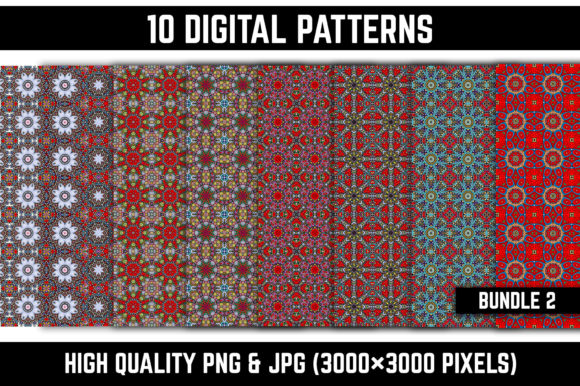
10 Digital Patterns Bundle No 2: Why Quality Matters More Than Quantity in Your Design Projects
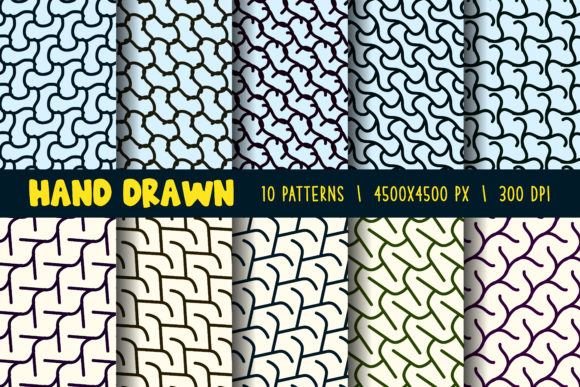
When you come across a resource like 10 Digital Patterns Bundle No 2, it can feel like a small goldmine. Ten high-quality patterns in one download, ready for everything from wallpaper to print-on-demand mugs, pillows, and even doormats. The appeal is obvious: variety, versatility, and the promise of professional results without hiring a designer. But here is the reality I have seen play out repeatedly with creators, entrepreneurs, and even seasoned marketers: having a great bundle is only half the battle. How you choose, prepare, and apply those patterns determines whether your final product looks polished or amateur.
Let me walk through the most common mistakes people make with digital pattern bundles, and more importantly, what you can do instead to get the results you actually want.
Mistake 1: Assuming a Pattern Works for Every Product Surface
A beautiful floral or geometric pattern might look stunning on a phone wallpaper but completely wrong on a t-shirt or a doormat. The truth is that scale, repeat style, and color density matter differently depending on the product. A pattern designed at 3000 × 3000 pixels with 300 DPI is technically high resolution, but that does not mean it will automatically look good scaled up for a large pillow or scaled down for a bottle sticker.
I have watched small business owners buy a pattern bundle, apply the same design to a mug and a canvas bag, and wonder why the mug looks crisp while the bag looks pixelated or oddly stretched. The issue is almost never the pattern itself—it is the failure to test the pattern at the intended print size before production.
What to do instead: Before committing to a final product, create a mockup at the actual dimensions you plan to print. For a 12-inch doormat, check how the pattern repeats and whether edges align naturally. For a t-shirt, pay attention to how the pattern sits on seams and necklines. A bundle like 10 Digital Patterns Bundle No 2 gives you options precisely so you can match the right pattern to the right surface.
Mistake 2: Overlooking File Format and DPI for Different Uses
One of the strongest claims of this bundle is that it includes both JPG and PNG files at 300 DPI. That is a feature many people overlook or misunderstand. A PNG with transparency is essential for products where the pattern should not have a solid white background—like stickers, bottle wraps, or layering over a colored t-shirt. A JPG is fine for wallpaper or a full-coverage print where background blending is not needed.
I have seen designers use a JPG with a white background for a clear sticker and then complain that the sticker looks cheap. The real mistake was not choosing the PNG file with transparency from the start. Similarly, many new creators do not realize that 300 DPI is the standard for print, but 72 DPI is often fine for digital wallpapers or social media mockups. Using a 300 DPI file where it is not needed can slow down your workflow, while using a low-resolution file for print can ruin your final product.
Practical advice: Familiarize yourself with the files before you start designing. Open each pattern in your editing software and verify whether the PNG has a transparent background or a white fill. Keep a folder structure where you label files by format and intended use. This small habit saves hours of rework later.
Mistake 3: Ignoring the Repeat Pattern Alignment
Digital patterns are designed to repeat seamlessly, but not all patterns tile perfectly across every product shape. A common frustration I hear from print-on-demand sellers is that their patterned tote bag looks great on the front but has an awkward seam or visible cut line on the side or bottom. This is rarely the pattern's fault—it is usually because the user placed the pattern manually without checking how it repeats across the full canvas.
In 10 Digital Patterns Bundle No 2, each file comes at 3000 × 3000 pixels, which gives you a generous starting tile. But if you are working on a product that requires multiple tiles—like a large wall art print or a fabric pattern for home design—you need to test the tiling behavior. Some patterns are designed as "full drop" repeats, while others work best as half-drop or brick repeats. Using the wrong repeat method can make a pattern look disjointed.
Better approach: Use a tiling preview feature in your design software (like Adobe Illustrator's pattern mode, or even a free tool like GIMP) to see how the pattern looks over a larger area. If you are designing for a cylindrical product like a bottle or a mug, simulate the curve to ensure the pattern wraps naturally without distortion at the seam.
Mistake 4: Choosing Pattern Style Based on Trend Rather Than Product Fit
Trends come and go. Right now, boho florals, abstract geometry, and tropical prints are popular. But that does not mean a trendy pattern is the right fit for your brand, your audience, or your specific product line. I have seen sellers rush to put the most popular pattern on every product—mugs, hats, pillows, stickers—only to end up with an incoherent collection that fails to build brand recognition.
A bundle like 10 Digital Patterns Bundle No 2 gives you ten distinct looks. That is a huge advantage if you use each pattern intentionally. For example, one pattern might work beautifully as a wallpaper accent wall but feel overwhelming on a small sticker. Another might be perfect for a unisex t-shirt but too busy for a cap.
How to decide wisely: List your products first, then match each pattern to a specific product. Ask yourself: Does this pattern support the product's function? A doormat should have a pattern that looks good from a distance and does not rely on fine detail. A book cover or home design element can afford more complexity. Never start with the pattern and then force it onto a product—start with the product need, then select the pattern that serves it best.
Mistake 5: Forgetting to Check Color Profiles Before Printing
This is one of the most overlooked details in digital pattern usage. The files in 10 Digital Patterns Bundle No 2 are likely provided in the sRGB color profile since that is standard for JPG and PNG files meant for both web and print. But if you send a pattern directly to a printer without converting to CMYK (for offset or commercial printing) or without soft-proofing for your specific printer, you may get colors that look dull, muddy, or completely different from your screen.
I have seen someone print a vibrant turquoise pattern on a cushion cover only to receive a muted greenish-blue. The screen looked perfect, but the file was never color-managed for the printer's profile. This is a costly and discouraging mistake.
What you should do: If you are printing at home, use your printer's ICC profile to soft-proof the pattern in your design software. If you are using a print-on-demand service, ask them what color profile they recommend (most accept sRGB, but some prefer Adobe RGB or CMYK). Test a single sample before ordering in bulk. Also, be mindful that PNG files can sometimes carry embedded color profiles that override your settings—check that before final export.
Mistake 6: Underestimating the Importance of Licensing for Commercial Use
Digital pattern bundles often come with varying licensing terms. Some allow unlimited commercial use, some restrict the number of products you can sell, and others require attribution. It is easy to assume that because you purchased the bundle, you can do whatever you want with it. That assumption can lead to legal issues, takedowns, or lost revenue.
I have seen creators build a whole store around a pattern bundle and later discover they could only sell up to 500 units per design, or that they were not allowed to use the pattern on certain product types like fabric or digital downloads. The terms vary by seller, and 10 Digital Patterns Bundle No 2 is no exception—you need to read the license file that comes with the download.
Better practice: Treat the license file as the most important document in your download. Read it before you create a single product. If the license allows commercial use on physical products, confirm whether it covers print-on-demand platforms, and whether you are allowed to modify the pattern or must use it as-is. When in doubt, contact the seller directly. A quick email now can save you from a headache later.
Mistake 7: Not Editing or Customizing the Pattern for Your Brand
A common misunderstanding is that digital patterns must be used exactly as provided. That is rarely true. Most bundles, including this one, allow you to resize, recolor, layer, or combine patterns—as long as your license permits it. The mistake I see is people using the pattern "out of the box" on every product, which leads to a generic, unmemorable look. When every seller uses the same bundle without customization, your products blend into the sea of sameness.
For example, if you are using a pattern for a t-shirt design, try adjusting the colors to match your brand palette. Or, combine two patterns from the bundle to create a unique composite for a pillow or a bag. Small tweaks make a big difference in perceived value.
Simple steps: Open the pattern in a photo editor or vector software. Use hue/saturation adjustments, color overlays, or gradient maps to shift the palette. You can also crop the pattern to create a focal point, or rotate it for a different feel. Just keep a copy of the original file untouched, so you can always revert if needed.
What You Should Check Before Using 10 Digital Patterns Bundle No 2
Before you dive into designing, take ten minutes to do a quick audit:
- Open all ten files and categorize them by style, color, and complexity.
- Note which formats (JPG vs PNG) are available for each pattern.
- Check the pixel dimensions and DPI in your software—confirm they are 3000 × 3000 at 300 DPI.
- Read the license file carefully and save it in a safe location.
- Create a test mockup for your primary product to see how the pattern behaves.
- Color-correct your screen or use a calibration tool if you plan to print.
This upfront investment of time eliminates most of the common mistakes and ensures that your finished product reflects the quality that the bundle is capable of delivering. The patterns themselves are high-resolution and professionally made—the difference between a good result and a poor one almost always comes down to how you handle the file preparation and application.
Final Thoughts
Digital pattern bundles like 10 Digital Patterns Bundle No 2 are an excellent resource when used with intention. They save you hours of design work, give you a professional starting point, and open up multiple product possibilities from a single purchase. But no bundle is a magic bullet. The patterns are only as good as the preparation, testing, and customization you put into them.
Whether you are working on wallpaper for a client, a print design for a t-shirt, a mug, a pillow, a doormat, a sticker, a bag, a cap, a bottle, or packaging—every product demands attention to detail. Choose your patterns carefully, match them to the right surface, verify your color and format settings, and always check the license. If you do those things consistently, you will get professional results that your customers will notice and appreciate.
Follow us and stay updated for more practical advice on getting the most out of your design resources. Thank you for reading, and I hope your next project turns out exactly as you envisioned.