Flowers Background Patterns Set: Practical Advice for Getting the Most Out of Your Digital Paper Pack
If you are looking for a versatile way to elevate your creative projects without spending hours designing backgrounds from scratch, a Flowers Background Patterns Set can be a smart addition to your toolkit. These digital papers typically come as high-resolution PNG files, ready to use in card making, scrapbooking, presentations, social media graphics, and more. But even with a well-prepared pack, many people make avoidable mistakes that waste time, ink, or the quality of their work. The goal here is to help you avoid those pitfalls and use your digital paper confidently from the start.
What Exactly Is a Flowers Background Patterns Set
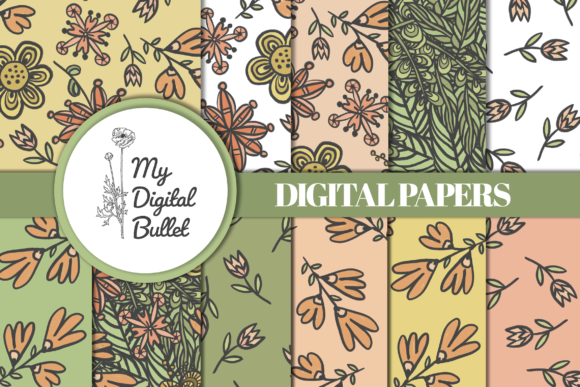
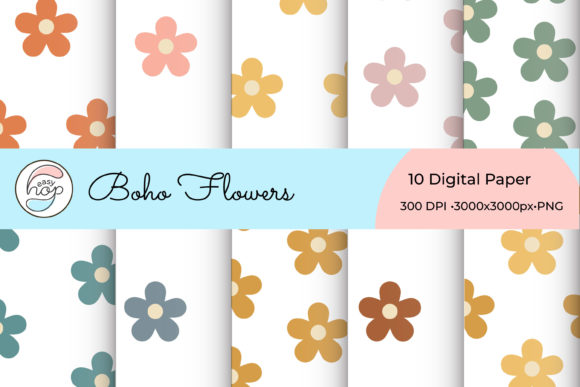
A Flowers Background Patterns Set is a collection of digital paper files featuring floral motifs. In this case, the set includes ten PNG files at 300 DPI, each measuring 31.25 x 31.25 inches (or 3000 x 3000 pixels). That means you get large, high-resolution backgrounds that can be scaled down for smaller projects without losing detail. The files come compressed in a ZIP folder, and once extracted, you can import them into almost any design or office software. The patterns work well as full-page backgrounds, as decorative panels, or as cut-out accents for handmade projects.
Many people buy these sets for their beauty, but the real value lies in how you prepare and use them. Overlooking the technical details, the file format, or the printing setup often leads to frustration or disappointing results. Let’s walk through the most common missteps and how to handle them properly.
Mistake One: Ignoring the ZIP File Extraction Process
One of the most frequent issues people encounter is not knowing how to properly extract files from a ZIP folder. The set arrives compressed, and if you try to open the PNGs directly from within the ZIP, you may see only placeholder images or get errors when importing into your software.
What happens: You double-click the ZIP folder, see the file names, but your design program cannot read them correctly. Or you try to drag a file into a project, and it appears blank.
The better approach: Take a moment to extract the files to a dedicated folder on your computer. On Windows, right-click the ZIP folder and choose “Extract All,” then select a destination. On Mac, double-click the ZIP to unpack it, but for best results, move the contents into a new folder and use the terminal command unzip if you encounter any stubborn files. Once extracted, you can import them into Word, PowerPoint, Google Slides, Procreate, Canva, or any graphic design tool without trouble.
This small step saves you from corrupted imports, missing thumbnails, and wasted time trying to troubleshoot an issue that has a simple fix.
Mistake Two: Using the Pattern at Full Size Without Resizing
Each paper in this set is 31.25 inches wide at 300 DPI. That is enormous for most practical uses. If you drop the full-size image into a standard document or slide, you are likely working with a file that is much larger than you need. This can slow down your software, consume unnecessary memory, and waste printer ink if you print at that size.
What happens: You insert the full 3000x3000 pixel image into a letter-size document. The file is huge, the program lags, and when you print, you use far more ink than necessary for a background that only needs to cover an 8.5x11 inch area.
The better approach: Resize the digital paper to match your project dimensions before inserting it. Open your document settings, create a blank page at the size you need, then copy and paste the pattern into that page. Use the image scaling tools to reduce the pattern to the exact width and height required. If you are using the paper as a background for a card or scrapbook page, keep the resized version at 300 DPI for print quality, but reduce the pixel dimensions to something manageable, like 2550 x 3300 pixels for a letter-size page.
This saves ink, speeds up your workflow, and prevents your software from struggling under the weight of oversized files.
Mistake Three: Neglecting Resolution Settings When Printing
A 300 DPI digital paper is designed for high-quality print output. But if your printer or software defaults to a lower resolution, you will not get the crisp, clean flowers pattern you expect. This is especially common when people print from word processors or presentation tools that are not set to maximum quality.
What happens: You hit print, and the floral background looks pixelated, blurry, or faded. The details in the petals and leaves lose definition, and the overall effect is disappointing.
The better approach: Before printing, check your printer settings and select the highest quality mode (often labeled “Best” or “High”). Also confirm that your document is set to 300 DPI. In many programs, you can adjust the image resolution under “Page Setup” or “Print Settings.” If you are using a service like Google Slides, export the page as a high-resolution PNG or PDF before printing, rather than printing directly from the browser.
Taking control of your output settings ensures that the beautiful floral patterns look as intended on paper.
Mistake Four: Overlooking File Format Compatibility
These digital papers are PNG files, which support transparent backgrounds and high-quality compression. However, not every program handles PNGs the same way. Some older or minimalist software may struggle with large PNG files, or they may treat them as flat images without respecting transparency if that matters for your project.
What happens: You try to insert the pattern into a document, and the file appears as a broken image or is not recognized. Or you need a transparent area around a floral motif, but the software fills it with a white box.
The better approach: Test the file in your intended program before committing to a full project. If you are using Procreate or Photoshop, PNG files work beautifully. If you are using Word, PowerPoint, or Google Slides, they also work, but you may need to set the image “wrap” option to “Behind Text” or adjust the transparency manually. For projects where you need the background to be completely seamless, consider opening the PNG in a photo editor first and saving a copy as a JPEG if transparency is not required. This eliminates any compatibility surprises.
Mistake Five: Using the Same Pattern for Every Element
When you have a set of ten floral patterns, it is tempting to pick one favorite and use it for everything: background, accents, borders, and even embellishments. That approach can make your project feel flat or visually cluttered.
What happens: The design lacks contrast. Every element blends together, and the floral motif becomes overwhelming rather than elegant. The viewer’s eye has no resting place.
The better approach: Treat the patterns as a system. Use one large-scale floral design as the main background, a smaller or more subtle pattern for panels or mats, and a solid color or very subtle texture for focal points. For example, place a delicate rose pattern behind a photo, then frame the photo with a complementary striped or dotted pattern from the set. Cut out individual flowers from one of the papers and layer them over a solid background for dimension. This creates depth and visual interest while keeping the floral theme cohesive.
Mistake Six: Forgetting to Save a Master Copy
Once you resize, crop, or edit a digital paper, it is easy to accidentally overwrite the original file. If you later need the full-size version for a different project, you may have to download the set again or work with a degraded copy.
What happens: You resize a pattern to fit a card, save the document, and close it. The original high-resolution PNG is lost, and you only have a low-resolution version that does not print well for a larger project later.
The better approach: Keep the extracted ZIP contents in a secure folder and never edit the originals directly. Instead, create a copy of the file you want to use and work on that copy. Some designers prefer to import the original PNG into their project and resize it there without ever saving over the source file. This way, the full-resolution master is always available for any future use, whether you are printing a large poster or creating a small social media graphic.
Mistake Seven: Not Previewing the Pattern on Your Actual Project Surface
A flowers background pattern can look different on screen versus on paper, especially if you are printing on textured cardstock, glossy photo paper, or matte presentation paper. The same pattern may appear too busy, too light, or misaligned once applied.
What happens: You design an entire scrapbook page on screen, print it, and realize the flowers pattern clashes with your photos or makes the text hard to read. You waste paper and ink.
The better approach: Print a small test swatch of the pattern on the paper you intend to use. Place your photos, text, or other elements on top of the swatch to see how they interact. Adjust the scale or opacity of the pattern if needed. In digital projects, use the software’s preview mode or export a low-resolution draft to check readability before finalizing.
This minor step prevents major rework and helps you make informed design decisions.
Mistake Eight: Overcomplicating the Import Process
Some people hesitate to use digital papers because they assume the import process is technical or time-consuming. They search for complicated plugins or try to convert files unnecessarily.
What happens: You spend twenty minutes trying to figure out how to “install” the digital paper, when you could have simply copied and pasted it into your document in thirty seconds.
The better approach: Open your program, start with a blank page, copy the PNG file from your extracted folder, and paste it directly onto the page. That is all it takes. In most modern software, you can also drag and drop the file from the folder into your document. Do not overthink it. The files are ready to use as soon as they are extracted.
If you want to save even more time, create a template document with your preferred page size and resolution, and simply swap out the background pattern each time you start a new project.
Mistake Nine: Underestimating the Value of the Complete Set
With ten patterns in the pack, it is easy to gravitate toward the flashiest design and ignore the rest. But a thoughtfully curated set usually includes a variety of scales, densities, and color variations that work together as a system.
What happens: You use only one or two patterns and miss out on the versatility the set offers. Later, you buy another set because you think you need more variety, when the original set could have covered all your needs.
The better approach: Examine every pattern in the set before starting a project. Lay them out side by side. Notice which patterns work well as full backgrounds, which work as borders, and which can be used as accent elements. By understanding the full range, you get more value from a single purchase and reduce the need to buy additional sets for every new project.
Mistake Ten: Ignoring the Digital Paper’s Size for Digital-Only Projects
Even if you never print the patterns, using a 3000x3000 pixel file for a web graphic that only needs to be 1200x628 pixels is wasteful. Large files slow down your editing software and take longer to upload or share.
What happens: You use the full-size PNG for a blog image or social media post. The file is several megabytes large, your browser chugs, and the upload takes extra time. The extra pixels do nothing to improve the visual quality on screen.
The better approach: Resize the pattern to your exact output dimensions for digital projects. Most online platforms need only 72 DPI for screen display. If you are using the pattern in a presentation or a social media graphic, scale it down and export at screen resolution. This keeps file sizes manageable and your workflow fast.
Putting It All Together
A Flowers Background Patterns Set gives you a foundation of beautiful, high-resolution floral designs that can support a wide range of creative projects. The key to getting the most out of it lies not in the patterns themselves, but in how you handle the technical details: extracting files properly, resizing to fit your project, checking resolution settings, and using the patterns with intentional variation. By avoiding the common mistakes of ignoring file formats, overusing a single pattern, or printing without previewing, you will save time, reduce waste, and produce results that look polished and professional every time.
Whether you are a scrapbooker, a card maker, a teacher designing classroom materials, a small business owner creating packaging, or a marketer building social media visuals, this digital paper set can work for you. Just take a few extra minutes on the front end to prepare your files and plan your layout, and you will wonder why you ever thought digital papers were complicated.