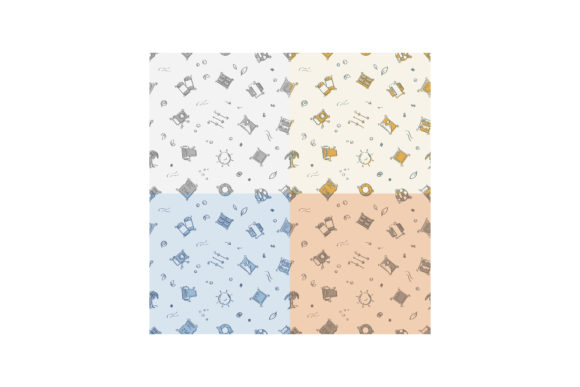
Set of Seamless Patterns with Doodle Linear Icons
When you work across design, printing, or content creation, the assets you choose directly shape the quality and efficiency of your output. A set of seamless patterns with doodle linear icons is one of those versatile resources that fits into multiple phases of a project, from early planning to final production. Whether you are preparing fabric prints, editing photos of camera gear, or building a consistent visual brand, these vector-based patterns provide a reliable foundation.
This article examines what this type of pattern set contains, how it integrates into real workflows, and practical ways to implement it in your own projects. The focus is on execution, not hype.
Understanding the Asset: What This Set Contains
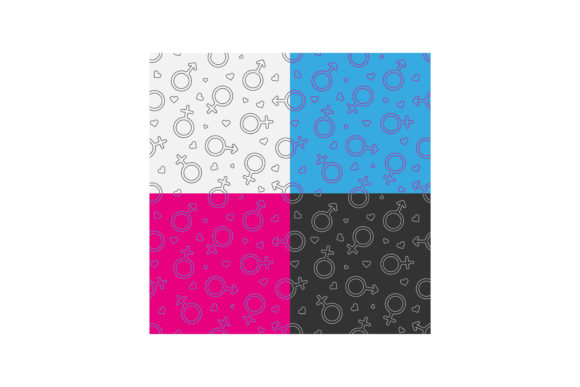
A set of seamless patterns with doodle linear icons typically includes multiple repeating tileable designs. Each pattern is built from simple hand-drawn style icons, often depicting cameras, film rolls, memory cards, and lenses. These are not just isolated drawings; they are arranged in a repeatable grid that can be applied to surfaces without visible seams.
Because they are vector-based, the patterns scale cleanly from a tiny icon on a business card to a large banner or fabric print. The linear style, with its consistent stroke weight and open shapes, keeps the design legible even at small sizes. This makes the set suitable for both digital screens and physical printing.
In practical terms, you are getting a collection of ready-to-use background patterns that do not require you to draw or arrange the icons yourself. The design work is already complete. Your job is to select the right pattern for your medium and apply it.
Where These Patterns Fit in Your Creative Workflow
Understanding where this resource fits in a broader process helps you use it more strategically. You can integrate the patterns before, during, or after a project, depending on your role and the deliverables you need.
Pre-Project: Planning and Asset Collection
If you are a freelancer, small business owner, or marketer, you likely spend time gathering assets before starting a design. Having a set of seamless patterns on hand means you do not have to create a repeating pattern from scratch. You can drop a pattern into your mockup or mood board to quickly test how a camera-themed design looks on fabric or a product package.
This planning phase is also where you evaluate compatibility. Check the file format of the patterns – typically AI, EPS, or SVG for vectors. Ensure they work with your design software, whether that is Adobe Illustrator, Affinity Designer, or a less specialized tool like Canva (which often accepts SVG). If you are working with a printer, ask if they accept vector files or if they need a rasterized version. Prepare accordingly.
During Production: Efficient Design and Prototyping
Once a project is active, the patterns become a time-saving element. For example, an apparel designer printing on fabric can apply a pattern directly to a garment mockup. A content creator building a set of Instagram templates can use the pattern as a background. Because the design is seamless, it fills any area without awkward cutoffs.
If you are producing photography prints – for instance, photos of cameras, lenses, or memory cards – the pattern can serve as a backdrop or decorative border. The doodle linear icons complement the subject without overpowering it. You can adjust the opacity or scale of the pattern to suit the composition.
When working with other team members, such as a printer or a fabric supplier, send them the vector pattern file directly. This avoids the quality loss that occurs with low-resolution JPEGs. Keep a copy of the pattern in its original format for future revisions.
Post-Production: Application and Finalization
After your design is complete, the pattern remains useful for quality control. Print a proof on the intended fabric or paper to check how the pattern repeats and whether the scale looks correct. A seamless pattern that works well on screen may need adjustment for physical materials. If you notice a mismatch, you can return to the vector file and modify the scaling without losing fidelity.
For entrepreneurs or publishers who sell digital products, the pattern set can be repackaged as a bonus item or a standalone product. This extends the value of your initial purchase and can generate additional revenue.
Integration with Photography and Printing Tools
Because the patterns feature camera-centric icons, they naturally align with photography workflows. Photographers, videographers, and studios often need visual branding that reflects their tools. Here is how the patterns interact with common photography equipment and processes:
- Camera and lens: Use a pattern with lens icons as a watermark overlay or as background texture for behind-the-scenes shots.
- Film and memory card: Pattern elements that include these items can be used on packaging, stickers, or memory card wallets for resale.
- Printed photos: Apply a subtle seamless pattern as a border or mat for prints. Vector patterns keep the edges sharp.
If you are printing on fabric, such as tote bags, t-shirts, or decorative pillows, the linear doodle style works well because it does not rely on heavy ink coverage. The open lines leave more fabric visible, resulting in a lighter feel.
Practical Implementation Tips for Different Use Cases
Getting the most out of these patterns requires a clear method. Below are specific tips for common applications:
Fabric Printing and Decoration
- Test scale. A pattern that looks good on a 10-inch screen may be too large or too small on a yard of fabric. Scale the pattern in your design software to match the repeat size recommended by your fabric printer.
- Use the right color mode. For fabric printing, ensure your file is in CMYK or the specific color profile your printer requires. Vector patterns often come in RGB by default. Convert before submission.
- Check the repeat. Even though the pattern is labeled seamless, zoom in and verify that edges align. Sometimes minor adjustments are needed when the pattern is imported into a different program.
Digital Design and Branding
- Maintain legibility. Doodle linear icons can become messy if scaled too small. Keep the pattern at a size where individual icons remain recognizable, especially when used on websites or presentations.
- Use as an accent. Instead of covering an entire background, apply the pattern to a strip, a section of a hero image, or inside a frame. This adds visual interest without overwhelming the main content.
- Combine with solid colors. Place the pattern over a white or light background and adjust opacity. This creates a subtle texture that works well for email headers or social media graphics.
Quality Control and Consistency Across Applications
Consistency matters when you use a pattern set across multiple outputs. If you print on fabric, create digital posts, and produce packaging all with the same pattern, slight variations in color or scale can make your brand look uncoordinated. To avoid this, standardize your approach:
- Keep a master file. Store the original vector pattern in a central location. Any changes or scaling should be done from this master, not from a copy that has been altered.
- Document your settings. Write down the scale, rotation, and color used for each application. This makes it easy to reproduce the same look months later.
- Check proofs. Before printing a large batch, order a single proof on the actual material. Fabric absorbs ink differently than paper, and a pattern that looks crisp in a proof may blur on a rougher surface.
Long-Term Use and Asset Management
A set of seamless patterns is not a one-use resource. With proper management, it can serve you across many projects and years. Consider these practices for long-term value:
- Organize by theme. If you own multiple pattern sets, tag them by subject (e.g., photography, technology, travel). This reduces search time when you need a specific style.
- Back up in the cloud. Vector files are small, so keep a copy in a cloud service like Google Drive or Dropbox. This protects against hardware failure and makes files accessible to collaborators.
- Revisit old projects. When you begin a new project, look through previously used patterns. Sometimes a pattern from a past campaign works better than a new purchase.
Small business owners and freelancers especially benefit from this approach, as it reduces the time spent on asset creation and allows more focus on execution.
A set of seamless patterns with doodle linear icons offers a practical shortcut for designers, photographers, and entrepreneurs who need reliable, scalable decoration. By understanding how it fits into your workflow – before, during, and after production – you can apply it with precision and avoid common pitfalls like scaling errors or color mismatches. Whether you are printing on fabric, editing photos of camera gear, or building a visual brand, this vector resource helps you maintain consistency and save time across projects.