25 Colorful Geometric Ikat Patterns: A Versatile Design Resource for Modern Creative Projects
Design resources that balance aesthetic appeal with practical adaptability are not always easy to find. The collection titled 25 Colorful Geometric Ikat Patterns attempts to fill that gap by offering a set of abstract modern designs rooted in the ikat tradition but reimagined through a contemporary, minimalistic lens. For professionals working across textile design, ceramic tile production, digital backgrounds, and print media, having access to a cohesive set of patterns that can serve multiple purposes often saves both time and creative energy. This set delivers exactly that kind of flexibility, and it deserves a closer look for anyone who regularly sources or commissions pattern assets.
The term ikat originally refers to a dyeing technique used in textile production, where threads are tie-dyed before weaving to create distinctive, slightly blurred geometric or figurative motifs. The patterns in this collection retain that visual character—bold, structured, and slightly softened at the edges—but they are rendered in a modern flat style with straightforward geometric shapes. The result is a series of designs that feel both culturally informed and thoroughly current. Whether you need ornamentation for fabric prints, a repeating background for a website, or a tile layout for a product package, this collection offers a consistent visual language that can be applied across many formats.
Key Characteristics of the Pattern Collection
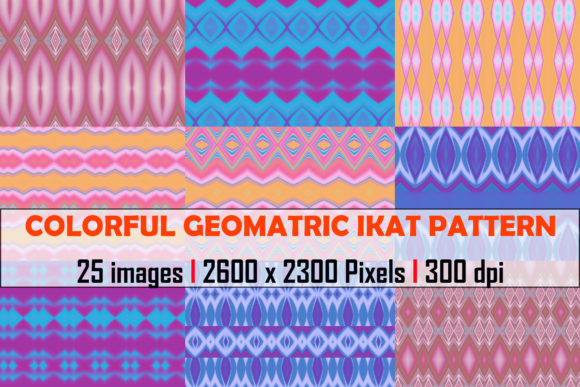
Understanding what makes 25 Colorful Geometric Ikat Patterns worth discussing begins with its core attributes. The set includes 25 individual images, each with its own color palette and motif, yet all share a common design vocabulary. This internal consistency is one of the set's strongest features because it allows you to mix and match patterns within a single project without visual conflict.
- Resolution and print readiness: Every image is provided at 300 dpi, which is the industry standard for high-quality print production. This means you can use these patterns for fabric printing, ceramic tile decoration, wallpaper production, or any other application where sharpness and detail matter. At 300 dpi, you also have room to scale the patterns for various medium-sized applications without losing clarity.
- Abstract modern aesthetic: The designs lean into minimalism. They use clean lines, repeated geometric forms, and restrained color compositions. This makes them suitable for contemporary interiors, modern branding, and digital interfaces where clarity and visual calm are valued.
- Flat background style: The patterns are presented on flat backgrounds with no gradients or texture overlays. This flatness is deliberate—it ensures that the pattern itself remains the focus and that the asset can be layered easily into other designs, whether in Photoshop, Illustrator, or a direct textile printing workflow.
Practical Value Across Different Mediums
One of the main reasons this collection stands out is its cross-medium usability. A single pattern set that works equally well for textile design, ceramic tile decoration, and digital backgrounds reduces the need to source multiple assets or adapt a single design for vastly different formats. Here is how the patterns perform in each of these areas based on realistic use.
Textile and Fabric Print
For anyone producing fabrics—whether for fashion, upholstery, or home decor—the geometric ikat motifs translate well into repeat patterns. The abstract nature of the designs means they do not rely on precise realism, which can sometimes be lost in fabric weaving or printing processes. The colors are vibrant but not oversaturated, which helps the patterns hold up across different fabric bases, from cotton and linen to synthetics. The 300 dpi resolution also means that when these patterns are scaled to fabric widths, the detail remains crisp.
Ceramic Tiles and Hard Surfaces
Tile decoration demands patterns that can be repeated seamlessly and that look cohesive across multiple units. The geometric shapes in this collection are simple enough that they work well on ceramic, porcelain, or even glass tiles. The flat design is especially useful here because tile glazes and digital printing on tiles tend to reproduce flat colors more accurately than complex gradients. The set's minimalistic approach also aligns well with current trends in interior design, where geometric tiles are popular for backsplashes, accent walls, and flooring.
Digital Backgrounds and Web Use
For web designers, bloggers, and digital marketers, the 25 patterns serve as ready-to-use background assets for banners, landing pages, social media graphics, and even presentation slides. Because the designs are flat and geometric, they do not distract from foreground content such as text or product images. They add visual interest without overwhelming the viewer, which is a balance many digital assets fail to strike. The fact that there are 25 distinct patterns also means you can rotate them across a site or campaign without repeating the same look too often.
Technical Quality and Usability Assessment
When evaluating any design resource, technical specifications matter as much as visual appeal. This set performs well on several technical fronts, though there are a few considerations worth noting.
File format and compatibility: The patterns are provided as high-resolution images at 300 dpi. This makes them compatible with essentially all graphic design software, including Adobe Photoshop, Illustrator, CorelDRAW, Affinity, and even simpler tools like Canva or Procreate. If you need vector versions for extreme scaling, this set may not include them, but for most applications the raster format at this resolution is more than adequate. For fabric or tile printing, raster files at 300 dpi are standard and widely accepted by production houses.
Color consistency: The color palettes across the 25 patterns are well balanced. They range from warm earthy tones to cooler blues and greens, with occasional pops of bright accent colors. This variety gives you room to select patterns that match your brand palette or project theme without having to manually recolor every asset. That said, if you require exact Pantone matching or highly specific brand colors, you will likely need to adjust the hues slightly, which is typical for any pre-made pattern set.
Seamless repeat capability: One of the most important aspects of any pattern collection is whether the designs tile seamlessly. Based on the structure of these geometric ikat motifs, they are designed with repeatability in mind. The abstract geometric shapes naturally lend themselves to seamless tiling, and the flat backgrounds ensure there are no visible edges when the patterns are repeated across large surfaces. For textile and wallpaper applications, this is a critical feature.
Who Benefits Most from This Collection
While the set is broadly useful, certain professionals and creators will find it especially valuable.
- Textile and fashion designers who need a library of modern patterns that can be applied to fabric prints quickly without spending weeks on original motif development.
- Interior designers and home decor brands looking for tile patterns or wallpaper designs that align with contemporary geometric trends.
- Graphic and web designers who want cohesive background assets for branding projects, website designs, or packaging mockups. The minimalistic style makes these patterns suitable for clients in lifestyle, home goods, hospitality, and creative industries.
- Small business owners and entrepreneurs who produce their own product lines—such as stationery, gift wrap, textiles, or ceramic goods—and need affordable, high-quality patterns without commissioning custom artwork.
- Educators and content creators who produce teaching materials, video backgrounds, or digital content that benefits from clean, repeating geometric patterns.
- Marketers and bloggers who need visually appealing backgrounds for social media posts, email headers, or promotional banners that look professional but do not require a full design team.
Strengths and Practical Limitations
No resource is perfect for every conceivable use, and being transparent about both strengths and limitations helps you decide whether this set fits your workflow.
Strengths: The set's main advantages are its professional resolution, consistent aesthetic across all 25 patterns, and genuine versatility across print and digital mediums. The flat geometric style is on-trend yet timeless enough that it will not feel dated in a few years. The number of patterns (25) is large enough to provide variety but small enough that you can familiarize yourself with each one and use them strategically. The price point for such a collection typically offers strong value compared to commissioning custom patterns from a designer, which can cost significantly more per motif.
Possible limitations: As mentioned, the patterns are raster images rather than vectors. If you need to scale a pattern to wall-mural size or extreme dimensions, you may need to upscale the file using software or accept some resolution loss. Additionally, while the colors are varied, they are fixed. If you require a very specific color scheme not represented in the set, you will need to do manual color adjustments. Finally, the designs are intentionally simple and minimalistic—if you are looking for highly intricate, detailed, or photorealistic patterns, this collection may feel too restrained for your needs.
Real-World Use Cases and Recommendations
To give you a clearer picture of how these patterns perform in practice, consider a few realistic scenarios.
Scenario one: A freelance graphic designer is creating a branding package for a boutique hotel. The hotel's identity is based on modern minimalism with subtle cultural references. The designer selects three patterns from the collection—one for the website background, one for in-room stationery, and one for tile patterns in the bathroom areas. Because the patterns share a visual language, the entire brand feels cohesive. The 300 dpi resolution means the tiles can be produced directly from the files.
Scenario two: A small business owner manufactures ceramic coasters and tiles. They need a set of designs that can be printed in small batches without expensive setup costs. They purchase this collection, choose five patterns that match their current inventory colors, and send the files to a digital ceramic printer. The flat geometric motifs print cleanly, and the coasters sell well because the designs appeal to modern home decor buyers.
Scenario three: A blogger who writes about interior design wants to refresh their website and social media profiles. They use several of the patterns as background images for quote cards, Pinterest pins, and email newsletter headers. The patterns add a professional finish without requiring the blogger to hire a designer. The variety means the blog does not look repetitive.
For best results, consider combining these patterns with your own typography, logos, or photographic elements. The minimalistic nature of the designs means they work well as supporting visuals rather than dominant ones. If your project calls for a bold, all-over pattern approach, you can also let the designs stand alone as primary decoration.
Final Observations on Long-Term Value
A design resource like 25 Colorful Geometric Ikat Patterns offers lasting value primarily because its aesthetic is not tied to a fleeting trend. Geometric ikat motifs have existed for centuries in various cultures, and the modern reinterpretation keeps them relevant without discarding their visual roots. For professionals who build libraries of reusable assets, this set can serve as a dependable option for multiple projects over time. The 300 dpi resolution ensures print quality remains high, and the abstract style gives you flexibility to adapt the patterns to new brand identities or color schemes with minimal rework.
If your work regularly involves textile design, tile production, digital backgrounds, or packaging, and you value efficiency without sacrificing visual quality, this collection is worth adding to your toolkit. Evaluate your specific project needs—especially regarding scaling and color customization—and the patterns will likely meet or exceed your expectations for a ready-to-use design resource.