Christmas Geometrical Seamless Patterns: A Versatile Design Resource for Holiday Projects
When the holiday season approaches, designers, crafters, and small business owners alike begin searching for visual assets that can carry a festive mood without sacrificing professionalism. Among the many options available, Christmas geometrical seamless patterns have carved out a distinct niche. These are not your typical snowflake-and-Santa motifs; they rely on crisp lines, repeating shapes, and structured layouts to evoke winter cheer in a more modern, graphic way. The collection described here offers a practical entry point for anyone looking to incorporate this style into printed or digital work, but understanding how it fits into the broader landscape of holiday design resources is essential before making a purchase.
What Makes This Pattern Collection Distinct?
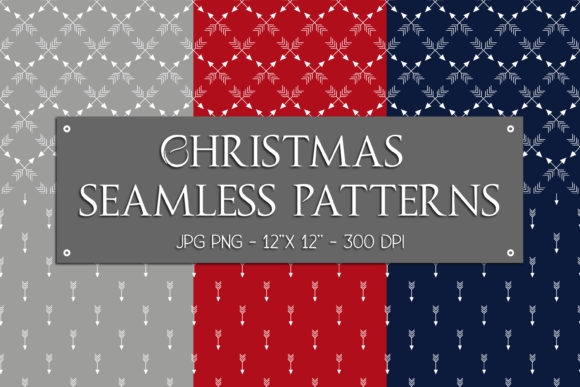
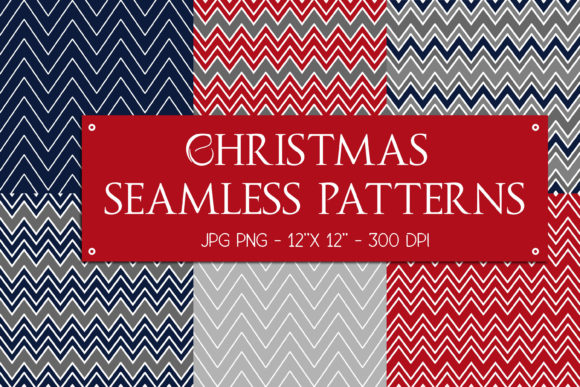
At its core, this set provides six distinct seamless patterns delivered in two complementary formats. Buyers receive a single zip file containing two folders: one with six PNG files (transparent background, 12 x 12 inches, 300 dpi) and another with six JPG files (white or colored background, same dimensions and resolution). This dual-format approach immediately sets it apart from collections that offer only one file type. The transparent PNGs are invaluable for layered compositions, while the JPGs with built-in backgrounds can be used as-is for quick projects.
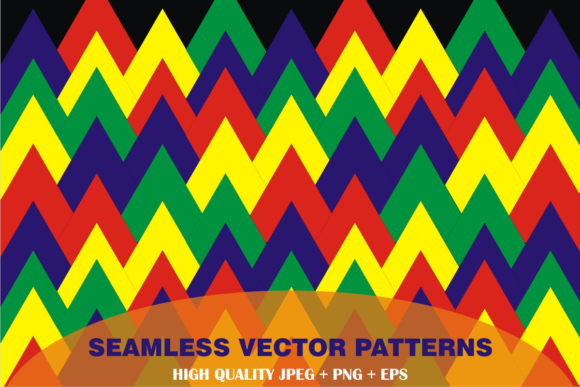
The geometrical nature of the designs means they rely on repeating triangles, diamonds, chevrons, hexagons, and other angular forms arranged in holiday color palettes. Instead of photographic imagery or hand-drawn illustrations, these patterns lean into symmetry and repetition. This makes them particularly well-suited for projects where a clean, contemporary look is preferred over traditional rustic or whimsical styles. The 300 dpi resolution at 12 x 12 inches ensures that even large-format prints remain sharp, which is a meaningful consideration for anyone producing posters, wrapping paper, or fabric.
PNG vs. JPG: Understanding the Tradeoffs
One of the first decisions a designer faces when working with any pattern collection is which file format to use. The inclusion of both PNG and JPG versions in this set allows for flexibility, but each format carries distinct strengths and limitations that affect how you might use the patterns.
PNG files with transparent backgrounds are ideal when you need to overlay a pattern onto another background color, a photograph, or a complex layout. The absence of a surrounding fill means the pattern integrates seamlessly into your existing design. However, PNG files tend to be larger in file size compared to JPGs, and they do not compress as efficiently. For web use, this can slow down page load times if multiple patterns are used. For print, the larger file size is rarely an issue, as high-resolution output demands detail.
JPG files with a background offer a smaller file footprint and are immediately ready for use in applications that cannot handle transparency. They are excellent for rapid prototyping, mockups, or projects where the pattern will fill an entire surface without layering. The tradeoff is that the background color is baked in, so you cannot easily separate the pattern from its surroundings without additional editing. If your workflow involves frequent color changes or compositing, the PNG versions will serve you better. If you need a quick drop-in solution for a holiday flyer or social media graphic, the JPGs save time.
For most users, having both options available means you can choose based on the specific task rather than being locked into one format. This is a practical advantage over collections that offer only one file type, particularly for those who work across both print and digital media.
Matching the Collection to Your Project Needs
Not every holiday project calls for geometric patterns, and understanding where this collection fits can save you from purchasing something that does not align with your goals. The use cases listed in the product description—Christmas cards, flyers, stickers, scrapbooking paper, kitchen textiles, bed linen, mugs, bags, and other printed or digital products—cover a broad range, but each application has its own fit considerations.
Print applications: The 300 dpi resolution at 12 x 12 inches is sufficient for most home and small-scale commercial printing. For scrapbooking paper, cardstock, or small fabric items like kitchen cloths, these patterns work well. For large-format fabric printing, such as bed linen or curtains, the 12-inch tile may repeat noticeably on larger surfaces. Designers handling such projects should consider whether the pattern scale feels appropriate when repeated across a full-size duvet cover or drape. If you need a larger seamless tile, you may need to scale the pattern in your design software, which could reduce sharpness if not done carefully.
Digital applications: For social media graphics, website backgrounds, or digital invitations, the PNG files with transparency are particularly valuable. The geometric style tends to render well on screens, as the clean lines do not blur or pixelate easily at typical web resolutions. However, the patterns are designed at 300 dpi, which is higher than necessary for most digital use. You can safely downsample them, but the file size of the originals may be overkill for web-only projects. If your primary use is digital, you might find smaller or lower-resolution collections more efficient, though having the high-resolution versions on hand provides future flexibility if you later decide to print.
Product packaging and merchandise: For mugs, bags, or stickers, the geometrical patterns offer a modern aesthetic that stands out among more traditional holiday designs. The repeat is predictable, which can be either a strength or a limitation. On a mug, a repeating geometric pattern can look intentional and contemporary. On a tote bag, the same pattern might feel repetitive if the tile is small. Testing the scale on a mockup before production is advisable.
When This Collection May Not Be the Right Fit
As with any design resource, there are situations where Christmas geometrical seamless patterns might not meet your needs. If your project calls for hand-drawn illustrations, realistic winter scenes, or highly detailed ornamental motifs, these patterns will feel too minimal and structured. They are not designed to evoke nostalgia or whimsy in the way that traditional holiday clip art or photographic textures do.
Similarly, if you need a pattern with a non-repeating or organic layout—such as a random scattering of snowflakes or a flowing garland—the rigid geometry of this collection will not provide that effect. The strength of geometric patterns is consistency and order, not organic variation. For scrapbookers who prefer mixed-media collage styles, these designs may feel too uniform unless they are used as a background layer beneath other elements.
Budget-conscious buyers should also note that six patterns is a modest quantity. Some collections offer dozens of variations. If you need extensive variety for a large project—such as a full branding suite with multiple pattern options—you may need to supplement this set with additional resources or consider a larger bundle. However, for focused projects like a set of Christmas cards or a small product line, six well-designed patterns are often sufficient.
Exploring Complementary Resources and Alternatives
While this collection stands on its own, many designers benefit from combining it with other asset types. For example, pairing these geometric patterns with simple typography, solid color blocks, or minimal iconography can create a cohesive holiday look without overwhelming the viewer. The patterns work well as backgrounds, borders, or accent elements rather than primary focal points.
If you are considering alternatives, the main categories of holiday design resources include:
- Seamless pattern bundles that offer a mix of styles (geometric, floral, illustrated, photographic) in one purchase. These provide more variety per download but may dilute the consistency of a single aesthetic.
- Vector pattern sets in AI or EPS format. These allow infinite scaling without resolution loss and are ideal for professional print production. The PNG/JPG only format of this collection means you cannot edit individual elements or resize without potential quality loss.
- Subscription-based asset libraries (such as Creative Market or Envato Elements) that give access to many patterns for a monthly fee. These are cost-effective if you need patterns frequently, but you do not own the files permanently.
- Custom pattern creation using tools like Adobe Illustrator or Affinity Designer. This offers total control but requires time and design skill.
For a one-time purchase with immediate download, this collection sits somewhere between simplicity and versatility. It does not require vector editing software, and the transparent PNGs provide editing flexibility without needing specialized tools to strip backgrounds.
Practical Tips for Getting the Most Out of the Collection
To maximize the value of Christmas geometrical seamless patterns, consider a few practical strategies. First, test the pattern scale early in your design process. Because the tiles are 12 x 12 inches at 300 dpi, they will appear differently depending on the output size. A pattern that looks balanced on a greeting card may feel too dense on a large poster. Most design software allows you to scale the pattern layer up or down, but scaling up too far can reveal pixelation, while scaling down reduces the prominence of the geometric shapes.
Second, use the transparent PNGs for layering experiments. Drop a geometric pattern behind a photo of a Christmas tree, or use it as a subtle texture on a gift tag. The transparency allows you to adjust opacity, blend modes, and color overlays without worrying about a background edge. This is particularly effective for digital invitations or web banners where you want the pattern to feel integrated rather than applied.
Third, consider combining multiple patterns from the set in a single design. Because they share a geometric style and color palette, they often complement each other. For example, use one pattern for the background of a flyer and a smaller-scale pattern for a call-to-action banner. This creates visual interest without the discord that can arise from mixing disparate styles.
Finally, keep the JPG versions as a backup for quick turnaround projects where you need a ready-to-use background without any additional steps. If you are producing a large batch of identical items, the JPGs save processing time and reduce the risk of file handling errors.
Decision Factors and Final Considerations
Choosing the right holiday pattern collection involves weighing several factors: design style, file format, resolution, quantity, and intended use. Christmas geometrical seamless patterns offer a modern, structured aesthetic with the practical advantage of both PNG and JPG versions at a quality suitable for most print and digital applications. They are best suited for projects where clean lines and repetition enhance the design rather than compete with it.
If your work demands organic textures, hand-drawn charm, or ultra-large format output, you may need to look beyond this collection or combine it with other resources. Similarly, if you require vector scalability or a much larger pattern library, other options may better serve your workflow. But for a focused, ready-to-use set that covers a wide range of common holiday projects, this collection provides a balanced blend of quality and convenience. By understanding its strengths and limitations, you can decide whether it aligns with your immediate needs and creative direction.