Abstract Seamless Patterns for Textile and Fabric Printing: A Practical Resource Review
For designers, print-on-demand sellers, surface pattern designers, and small business owners working with textiles, having reliable, repeatable artwork is essential. Abstract Seamless Patterns addresses this need directly by offering a complete asset pack built specifically for fabric and textile applications. This collection provides six distinct abstract seamless designs in multiple industry-standard formats, making it a versatile resource for those who need high-quality, tileable artwork without starting from scratch. The pack includes 6 EPS 10 files, 6 AI files, 6 JPEG images at 4000x4000 pixels, 6 PNG files at the same resolution, plus 6 additional PNG files with transparent backgrounds, and one combined EPS 10/AI file containing various shapes.
Key Characteristics and Format Flexibility
The most immediately notable aspect of Abstract Seamless Patterns is its comprehensive format coverage. By supplying vector files (EPS 10 and AI) alongside raster versions (JPEG and PNG), the pack accommodates both traditional print workflows and modern digital production methods. The 4000x4000 pixel resolution for raster files ensures sufficient detail for most textile printing needs, whether you are producing yardage on a digital printer or creating smaller runs for apparel, home decor, or accessories.
Having six distinct patterns gives the pack enough variety to be useful across multiple projects, while staying focused enough to maintain a cohesive aesthetic. Each pattern is designed to tile seamlessly, which is the fundamental requirement for any fabric print. This eliminates the tedious process of manually aligning repeats, saving hours of production time for professional users. The inclusion of transparent background PNGs is particularly valuable for mockup creation, product visualization, and layered design work where patterns need to sit over different base fabrics or colors.
Vector vs. Raster: Understanding the Practical Advantages
The dual-format approach of Abstract Seamless Patterns is not just about convenience; it reflects real workflow differences in textile design. Vector files (EPS and AI) allow infinite scaling without loss of quality, which is critical when patterns need to be resized for different fabric types, garment sizes, or product categories. A pattern that works perfectly on a silk scarf at one scale may need to be enlarged or reduced for a canvas tote bag, and vector formats handle these adjustments cleanly.
On the other hand, raster files (JPEG and PNG) are immediately usable in most print-on-demand platforms, mockup generators, and digital textile printers that accept common image formats. The 4000x4000 pixel size provides a large enough canvas to work with, even for wider fabric widths when printed at reasonable resolutions. Having both options means users can choose the format that best fits their specific software and output requirements without needing to convert files or rework artwork.
Real-World Performance for Textile and Fabric Printing
In practical use, Abstract Seamless Patterns performs reliably across a range of common textile applications. The seamless tiling works as advertised, with no visible joins or repeats that disrupt the visual flow. This is critical for fabrics where patterns need to wrap around garments, drape naturally, or be cut and sewn into finished products without obvious repetition lines.
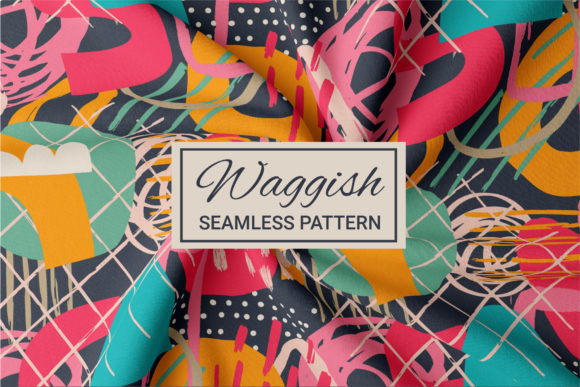
The abstract nature of the designs offers flexibility across different aesthetics and market segments. Abstract patterns tend to be less trend-dependent than figurative or representational prints, which extends the usable lifespan of the artwork. For small business owners and entrepreneurs who need to build consistent product lines without constantly refreshing their design library, this is a practical advantage. The patterns can work for modern, minimalist, or even boho-inspired collections depending on colorways and scaling choices.
When testing the files for print quality, the vector paths are clean and well-constructed, with no stray points or unnecessary complexity that could cause issues during RIP processing. The raster files are clean renders with good color consistency. Keep in mind that the JPEG files use compression, so for absolute highest quality output on fine textiles, you may want to use the vector or PNG versions as your source files.
Usability and Integration into Existing Workflows
One of the clear strengths of Abstract Seamless Patterns is how easily it integrates into common design and production workflows. The AI files open directly in Adobe Illustrator without any missing fonts or broken links, and the EPS 10 format is compatible with older versions of Adobe software as well as other vector applications like Affinity Designer and CorelDRAW. This broad compatibility reduces friction for teams or individuals who work across different software environments.
The transparent background PNGs are especially useful for mockup generation, which is a daily task for print-on-demand sellers and product designers. Instead of spending time clipping or masking patterns, you can simply drop the transparent file onto a product mockup and see how the print will look on a t-shirt, tote bag, or cushion cover. This accelerates the sampling and testing phase significantly. For those producing physical samples, the vector files allow quick color adjustments to match specific Pantone swatches or to harmonize with seasonal color palettes.
Who Benefits Most from This Pack
While Abstract Seamless Patterns has broad applicability, certain user groups will extract the most value from it. Professionals and small business owners who operate in print-on-demand, small-batch textile production, or surface pattern design will find the pack a time-saving resource that eliminates much of the preparatory work required to produce saleable fabric prints. The multiple formats mean that whether you are uploading to Printful, Printify, Spoonflower, or working directly with a local textile printer, you have the right file type ready to go.
Entrepreneurs and creatives who work across multiple product categories also benefit from the pack’s versatility. The same abstract pattern can be used for apparel, home decor, accessories, and even packaging when scaled appropriately. For educators and publishers who need repeatable patterns for educational materials or content creation, the seamless nature of the designs ensures professional results without the need for advanced illustration skills.
Freelancers and designers who take on client projects in textile or product design can use these patterns as starting points for customization. Since the vector files are fully editable, clients can request color changes, scale adjustments, or partial modifications without requiring a complete redesign from scratch. This flexibility adds value in client-facing work where speed and responsiveness are important.
Possible Limitations and Considerations
No resource is without its constraints, and being aware of the limitations of Abstract Seamless Patterns helps you decide if it fits your specific needs. The pack contains six patterns, which is enough for small to medium projects but may not provide enough variety for large-scale collections or extensive product lines. If you need dozens of distinct prints for a full catalog, you may need to supplement this pack with additional designs or create your own variations.
Another consideration is that the patterns are abstract, which means they may not suit projects that require figurative, botanical, geometric, or literal imagery. The abstract style is deliberately non-representational, so if your brand or client requires clearly recognizable motifs, this pack will need to be combined with other resources. However, for those seeking generic, versatile, and aesthetically flexible prints, this abstraction is actually a strength.
The files are supplied as-is, meaning you do not receive additional elements like color palettes, fabric textures, or surface previews. While the transparent PNGs help with mockups, the pack does not include pre-made product mockups themselves. This is standard for asset packs, but it is worth noting if you rely on integrated resources that include mockups or branding elements.
Long-Term Value and Investment Considerations
Evaluating the long-term value of Abstract Seamless Patterns depends largely on how you intend to use the files. For professionals who regularly produce textile prints, the pack pays for itself in time saved. Creating a single high-quality seamless vector pattern from scratch can take several hours, especially if you are refining repeats, testing scale, and outputting multiple formats. Having six ready-to-use designs means you can move from concept to production much faster.
The vector files also provide a foundation for customization, which extends the pack’s useful life well beyond the initial six designs. By recoloring, rescaling, or combining elements from the included various shapes file, you can generate new variations that feel distinct from the originals. This is especially valuable for entrepreneurs who need to refresh their product lines regularly without investing in entirely new artwork each season.
From a reliability standpoint, the files are well-constructed and free of common issues like misaligned repeats, missing layers, or corrupt data. This professional level of execution is important when you are depending on these assets for commercial production. Any flaw in a seamless pattern becomes magnified when printed across yards of fabric, so the attention to repeat quality is a tangible benefit.
Practical Recommendations for Optimal Use
To get the most out of Abstract Seamless Patterns, consider the following practical strategies. First, test each pattern at different scales before committing to production. A pattern that looks balanced at 100% scale may become too busy when enlarged or too sparse when reduced, so use the vector files to experiment with sizing early in your workflow. Second, create color variations from the vector files to match different seasonal collections or customer preferences. The original colorways may not suit every brand, but the abstract shapes give you plenty of room to explore alternative palettes.
For print-on-demand sellers, prepare both the JPEG and transparent PNG versions for your product listings. Use the JPEG for product images and the transparent PNG for mockups to save time on file preparation. If you are working with a textile printer, ask about their preferred file format and resolution requirements; the vector EPS and AI files often yield the best results for commercial production. Finally, keep the various shapes file organized separately, as it can be a useful source of elements for future pattern development even after you have used the six main designs.
Abstract Seamless Patterns is a practical, well-executed resource for anyone working with textile and fabric printing. Its format completeness, clean construction, and abstract versatility make it a reliable choice for professionals who need repeatable artwork without sacrificing quality or production efficiency. Whether you are launching a print-on-demand brand, designing a home decor collection, or building a library of patterns for client work, this pack offers a solid foundation that saves time while delivering professional results. Evaluate the aesthetic fit for your specific projects, and you will likely find that the pack’s combination of vector flexibility and raster convenience makes it a worthwhile addition to your creative toolkit.