Paper Dress Patterns and Vintage Dresses: A Strategic Asset for Creative Professionals
At first glance, a collection of digital paper featuring vintage dress patterns, 50s-inspired silhouettes, roses, and mannequins may appear to be a niche resource for scrapbookers. In practice, Paper Dress Patterns, Vintage Dresses as a digital design asset offers far more strategic utility than its charming aesthetic suggests. When approached with intention, this type of themed digital paper becomes a tool for brand differentiation, efficient content creation, and consistent visual communication across multiple touchpoints.
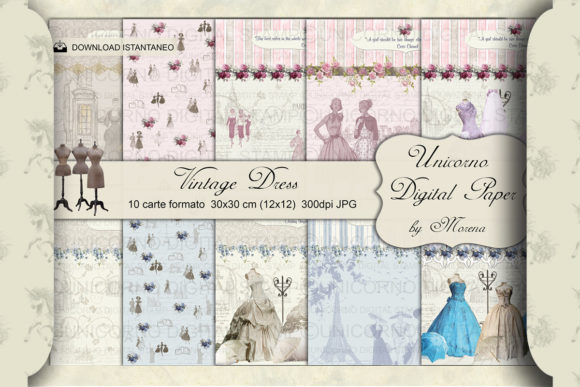
The collection in question—ten high-resolution sheets at 12 x 12 inches (300 x 300 mm), 300 dpi, in JPG format—provides a ready-to-use library of coordinated backgrounds. Each sheet carries distinct visual elements: dress forms, rose motifs, 1950s garment illustrations, and layered vintage textures. Because the files are digital and delivered as an instant download, they eliminate production delays and shipping costs. The real question is not whether these patterns are beautiful, but how they can serve a larger professional goal.
Why Themed Digital Paper Belongs in Your Planning Toolkit
Every creative project benefits from a coherent visual foundation. When you work with Paper Dress Patterns, Vintage Dresses, you are not simply selecting a pretty background. You are establishing a design system rooted in a specific era and mood. The 1950s clothing references, combined with rose accents and mannequin imagery, communicate nostalgia, craftsmanship, femininity, and attention to detail. These are not accidental associations—they are deliberate signals that shape how your audience perceives your work.
For business owners and marketers, this matters because brand recognition hinges on consistency. Using a unified set of vintage dress patterns across social media graphics, product packaging, email headers, and printed collateral creates a cohesive visual identity. Instead of searching for new imagery each time you post or publish, you draw from a controlled library. This reduces decision fatigue and ensures that every piece of content reinforces the same brand message.
From a planning perspective, having ten coordinated sheets means you can map out an entire campaign or product line in advance. You might assign one pattern to hero images, another to supporting graphics, and a third to background elements. This systematic approach elevates your output from scattered decoration to intentional design.
Practical Use Cases Across Professional Contexts
The versatility of Paper Dress Patterns, Vintage Dresses becomes evident when you examine specific applications. Consider the following scenarios where this digital paper set adds measurable value.
Branding and Visual Identity Development
If you are launching a boutique clothing line, a vintage-inspired stationery shop, or a lifestyle blog centered on retro aesthetics, you need visual assets that communicate your niche immediately. These digital papers provide a ready-made texture library. A fashion entrepreneur might use the mannequin patterns as a watermark on lookbook pages, while the rose motifs appear on hang tags and thank-you cards. The result is a branded ecosystem that looks curated rather than generic.
For established brands seeking a refresh, incorporating vintage dress patterns into limited-edition packaging or seasonal promotions can signal authenticity and heritage without requiring a full rebrand. The key is to use the patterns selectively—as accents rather than overwhelming elements—so they complement existing identity rather than compete with it.
Content Creation for Social Media and Blogging
Bloggers and social media managers often struggle to maintain a visually consistent feed. Using a single set of coordinated backgrounds simplifies this challenge. You can create a series of quote graphics, product teasers, and behind-the-scenes posts using the same paper patterns, varying only the foreground content. This instantly recognizable style builds audience familiarity and trust.
Practical example: A vintage fashion blogger might use the rose-patterned sheet as a background for styling tips, the dress-form sheet for outfit breakdowns, and the mannequin sheet for mood boards. Over time, followers learn to associate those textures with the blogger's voice. The patterns become a visual signature.
Educational and Instructional Materials
Educators and workshop facilitators who teach fashion history, pattern drafting, or design principles can use these digital papers to create engaging handouts, slide backgrounds, or worksheet headers. A lesson on 1950s fashion gains immediacy when surrounded by era-appropriate visuals. The high resolution (300 dpi) ensures that printed materials remain crisp, even at larger sizes.
By integrating Paper Dress Patterns, Vintage Dresses into course materials, you signal to students that you have invested in the learning experience. This attention to detail can improve engagement and recall, especially in online environments where visual stimuli compete for attention.
Product Design and Packaging
Small business owners who create physical products—such as candles, soaps, journals, or gift boxes—can use these patterns as wrapping paper, box liners, or product labels. Since the files are 12 x 12 inches, they accommodate many standard packaging sizes. The vintage aesthetic adds perceived value, allowing you to position your product as artisanal or nostalgic without increasing manufacturing complexity.
Consider a small stationery brand: using the rose and mannequin patterns as envelope liners or notebook covers creates a distinct shelf presence. Customers who value retro charm are more likely to notice, remember, and share such packaging on social media, generating organic word-of-mouth.
Strategic Considerations Before You Download
While the benefits are substantial, using Paper Dress Patterns, Vintage Dresses without a clear strategy can produce the opposite effect. Random application of themed patterns leads to visual clutter and diluted messaging. Before you incorporate these sheets into any project, ask yourself the following questions.
- What specific goal does this pattern serve? Is it reinforcing a brand attribute, creating mood, or solving a layout problem? If you cannot articulate the purpose, the pattern becomes decoration rather than communication.
- Who is the intended audience? Vintage aesthetics appeal strongly to certain demographics—often those aged 30 to 60 who appreciate craftsmanship, history, or retro culture. If your target market is younger or prefers minimalist design, the patterns may feel mismatched.
- How will you maintain consistency? Using all ten sheets across unrelated projects can fragment your visual identity. Decide in advance which patterns anchor your primary brand and which serve secondary or seasonal uses.
- What is the format of your final output? Digital screens, commercial printing, and home printing all reproduce colors and details differently. Test a sample before committing to large-scale production.
One common risk is overuse. When every surface, post, and package carries the same vintage dress pattern, the effect shifts from charming to repetitive. Reserve the strongest patterns for high-impact touchpoints and use subtler textures from the set for supporting roles. Balance is the difference between a cohesive brand and a monotone one.
Decision-Making Guidance for Creatives and Business Owners
Choosing a digital paper set is a small decision with ripple effects. Here is a practical framework for evaluating whether Paper Dress Patterns, Vintage Dresses aligns with your current needs.
First, assess your content volume. If you produce weekly blog posts, social media updates, and email newsletters, a coordinated library saves time and ensures quality. If you produce content infrequently, a smaller selection might suffice. The ten-sheet format provides enough variety for a quarterly campaign or a product launch without overwhelming your workflow.
Second, evaluate your technical readiness. These JPG files at 300 dpi are compatible with virtually all image editing software. You do not need advanced skills to layer text or graphics over them. However, if you plan to resize or heavily modify the patterns, ensure your software handles high-resolution files without performance issues.
Third, consider your long-term creative direction. Vintage trends in design have shown remarkable staying power, particularly in fashion, home decor, and stationery. Investing in a set like this now can serve multiple projects over several years. The digital format means you can revisit the patterns for future campaigns without worrying about inventory or reordering.
Operational Efficiency and Customer Experience
From an operations standpoint, instant digital delivery removes friction. There is no shipping cost, no waiting period, and no waste. For a small business owner juggling multiple responsibilities, this efficiency translates directly into faster turnaround times. You can download the set, select your patterns, and produce mockups within the same hour.
Customer experience also benefits indirectly. When your branding is consistent and visually appealing, customers perceive your business as professional and trustworthy. The vintage dress patterns, with their connotations of quality and nostalgia, can elevate a standard product into a memorable unboxing experience. A package lined with rose-patterned paper tells the recipient that you cared about details before they even opened the box.
Long-Term Value and Adaptability
The true measure of a digital asset is not how it looks today, but how it performs over time. Paper Dress Patterns, Vintage Dresses offers durability because its themes are classic rather than trend-driven. Roses, mannequins, and 1950s fashion references have cycled through design trends for decades and will likely continue to resonate with audiences who appreciate vintage aesthetics.
Adaptability is another strength. Because each sheet is an individual JPG file, you can mix and match them, scale them, crop them, or combine them with other textures. They work as backgrounds, overlays, borders, or even pattern fills for vector illustrations. A creative professional might use them in entirely different ways across a single year—first for a spring collection lookbook, later for autumn event invitations, and again for holiday gift wrapping.
This flexibility reduces the need to purchase new assets for every initiative. Over time, the cost per use drops significantly, making the initial investment highly rational for budget-conscious creators and small teams.
Practical Tips for First-Time Users
If you are new to working with themed digital paper, start small. Choose one or two patterns from the set and integrate them into a single project, such as a set of social media templates or a product brochure. Observe how the patterns interact with your text, logos, and images. Adjust opacity, contrast, or placement until the pattern supports your content rather than competing with it.
Keep a style guide that notes which patterns correspond to which use cases. For example, "Rose pattern = feminine product launches" and "Mannequin pattern = educational content." This documentation helps collaborators and future you maintain consistency without reinventing the rules each time.
Finally, respect the resolution. At 300 dpi and 12 x 12 inches, these files are designed for professional output. Avoid downscaling them to low-resolution versions for web use unless you are certain the quality remains acceptable. On most screens, a properly scaled 300 dpi image will look sharp and rich, but testing on multiple devices is always wise.
Using Paper Dress Patterns, Vintage Dresses thoughtfully means treating these digital sheets as more than decoration. They are a resource for building recognition, improving efficiency, and communicating a specific aesthetic with clarity. When aligned with your goals, planning, and audience expectations, a simple set of digital papers becomes a strategic advantage in a crowded visual landscape.