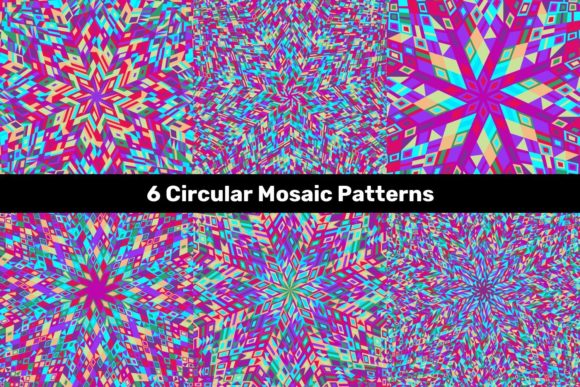
Why 6 Circular Multicolored Mosaic Patterns Belong in Every Creative Toolkit
Design resources that balance visual impact with practical flexibility are rare. When a single package delivers six distinct circular multicolored mosaic patterns in multiple formats, it goes beyond decoration—it becomes a strategic asset. Whether you are a marketer building a brand identity, a content creator aiming for scroll-stopping visuals, or a small business owner refreshing your website, these patterns offer a shortcut to professional-grade design without requiring a team of specialists.
The growing demand for vibrant, structured visuals reflects a broader shift in how audiences engage with content. In a landscape saturated with minimalism and flat design, circular multicolored mosaic patterns stand out as dynamic, layered, and memorable. They evoke craftsmanship, geometry, and a sense of playful precision that resonates across industries—from fashion lookbooks to educational infographics, from event invitations to social media templates.
What Makes Circular Multicolored Mosaic Patterns So Versatile
At first glance, these patterns might appear purely decorative. But their circular arrangement introduces a natural focal point that draws the eye inward, making them ideal for framing logos, typography, or key messages. The multicolored aspect adds energy without chaos; each hue can align with a brand palette, seasonal theme, or emotional tone. Because the patterns are pre-designed, they save hours of manual composition while offering a built-in sense of balance and rhythm.
The package format—six JPG files at 5000x5000 pixels, plus six vector EPS and six vector AI files—ensures that the same pattern can be used in vastly different contexts. A blog header might need a high-resolution raster image, while a printed brochure requires scalable vectors. Having both options eliminates the need to redraw or relicense artwork for different media. This dual-format approach reflects a practical understanding of modern workflows, where digital and print often overlap within the same project.
How These Patterns Fit Into Current Creative Trends
Several converging trends explain the rising popularity of circular multicolored mosaic patterns. First, the return of maximalism in visual design has encouraged bolder color choices and intricate compositions. Audiences have grown tired of bare white backgrounds and generic stock photos; they crave textures, patterns, and visual storytelling that feels handcrafted. These mosaic patterns deliver that richness while maintaining a structured, repeatable form—a combination that minimalism rarely achieves.
Second, the shift toward branded content across all channels means that businesses need unique, cohesive visuals that work across platforms. A circular mosaic pattern can serve as a watermark on video thumbnails, a background for podcast cover art, a repeating element on a website footer, or a decorative border on a product label. Consistency becomes effortless when the same vector file scales from a credit-card-sized tag to a billboard-sized display.
Third, the rise of DIY design tools like Canva, Figma, and Adobe Express has empowered non-designers to create polished content. However, these tools only go so far without quality assets. Having ready-to-use vector patterns in AI and EPS formats means that even someone with basic software skills can drop a professional-grade mosaic into a layout, adjust colors if needed, and produce results that look intentionally designed rather than improvised.
Practical Applications Across Different Fields
For marketers and brand managers, these patterns offer a way to unify a campaign without starting from scratch. Imagine a seasonal promotion where each advertisement features a different mosaic background, yet all six share a consistent circular structure and multicolored energy. The viewer recognizes the visual thread even as the colors shift. This creates brand recognition without monotony.
For educators and course creators, circular mosaics can transform dull slide decks into engaging visual journeys. A pattern behind a key quote or statistic adds depth and draws attention. The high-resolution JPGs ensure clarity on projectors and screens alike, while the vectors allow for resizing without degradation—useful for printed handouts or posters.
For small business owners and entrepreneurs, time is the scarcest resource. Having a library of six distinct patterns means you can rotate visuals on social media, newsletters, and packaging without repeatedly hiring a designer. The variety keeps your content fresh, and the professional look builds trust with customers who might otherwise perceive a small operation as amateur.
For freelance creatives and hobbyists, these patterns serve as a foundation for experimentation. You can use them as-is for client projects or manipulate them—adjusting transparency, layering textures, or combining elements—to create something entirely new. The vector formats make this flexibility technically feasible without requiring advanced illustration skills.
Why the Package Format Matters More Than You Might Think
Including JPG, EPS, and AI files in a single package might seem like a technical detail, but it has real implications for workflow and longevity. JPG files at 5000x5000 pixels are large enough for most digital and small-format print uses. They open in any image viewer, browser, or editing tool—no special software required. This makes them the go-to choice for quick edits, web uploads, and sharing with collaborators who may not have design programs.
Vector EPS and AI files, meanwhile, open up professional-grade possibilities. You can recolor individual segments, isolate elements, scale to any size without pixelation, and integrate the patterns into complex layouts. For a graphic designer preparing a multipage brochure or a large-format trade show display, vectors are indispensable. Having both formats in one purchase means you are covered no matter how the project evolves.
This approach also future-proofs your assets. Software changes, file formats evolve, but vectors remain a stable, widely supported standard. Five years from now, those AI and EPS files will still open, still scale, and still look crisp. That kind of durability matters for anyone building a long-term brand or content library.
Choosing the Right Pattern for Your Project
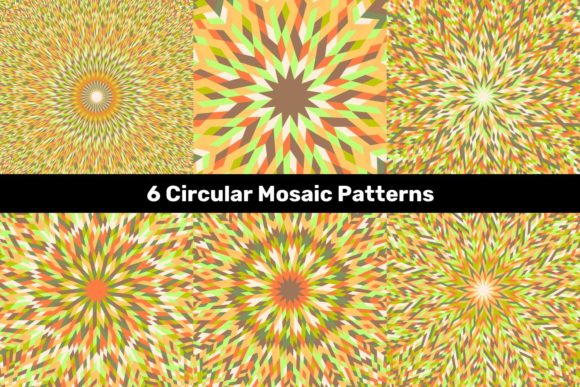
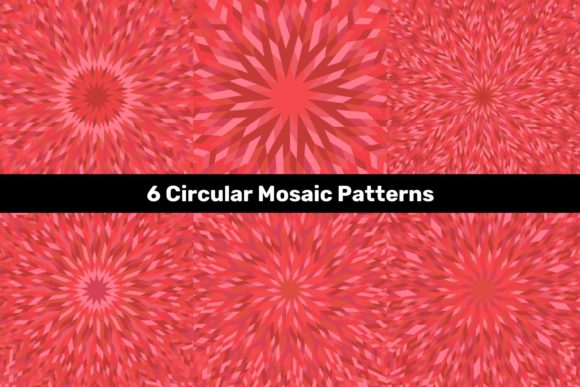
While all six patterns share a circular mosaic structure, each offers a distinct visual personality. Some lean toward warm, earthy tones that suit organic or lifestyle brands. Others use cooler, more saturated colors that feel modern and tech-forward. When selecting a pattern, consider the emotional tone of your project. A pattern with high contrast and bold hues works well for attention-grabbing social media graphics. Softer, more analogous color schemes are better for luxury packaging or editorial layouts.
It is also worth thinking about the pattern scale. Because these are high-resolution and vector-based, you can enlarge or reduce them without losing quality. A pattern used as a full background might need different scaling than one used as a small accent. Testing a few variations within your layout will help you find the ideal visual balance.
Practical Tips for Getting the Most Out of These Patterns
- Layer with transparency: Placing a mosaic pattern behind text at 30–50% opacity adds texture without overwhelming readability.
- Use as a mask or clipping path: In vector software, you can use the circular mosaic as a frame for photos or illustrations.
- Combine with solid color blocks: Isolate a portion of the pattern and pair it with a complementary solid background for a modern, editorial feel.
- Rotate and flip: Changing orientation can give you additional variations without needing new assets.
- Test on both light and dark backgrounds: Some patterns will pop beautifully on dark surfaces, while others shine on white or pastel bases.
- Maintain a consistent palette: If you use multiple patterns across a project, check that their color families feel cohesive together.
Why Professionals Are Paying More Attention to Ready-Made Pattern Libraries
The era of believing that all design must be created from scratch is fading. Efficiency does not equal laziness; it reflects a mature understanding of resource allocation. Professionals who invest in high-quality, multi-format pattern packages free up time for strategic thinking, custom typography, photography, and client consultation—the areas where human judgment adds the most value.
Moreover, the circular multicolored mosaic pattern style is not a passing fad. Its roots stretch back to ancient mosaic art, Islamic geometric design, and modernist color theory. By using these patterns, creators tap into a visual language that feels both timeless and contemporary. That longevity makes the asset a smart investment, not a disposable trend.
A Realistic Look at What These Patterns Can and Cannot Do
It is important to set reasonable expectations. Six patterns, no matter how well made, will not replace a comprehensive brand identity or a full design system. They are tools, not solutions. However, they can dramatically accelerate specific tasks—creating a cohesive social media feed, producing a quick pitch deck, or adding polish to a product launch. The value lies in having options that look intentional and professionally crafted, even when time or budget is tight.
Similarly, while the vector formats allow for extensive customization, they require basic software proficiency. If you have never opened Adobe Illustrator or a compatible vector editor, you will likely rely on the JPG files initially. That is perfectly fine. The JPGs are robust enough for many uses, and the vectors remain available for when your skills or needs grow.
Final Thoughts on Adding Circular Multicolored Mosaic Patterns to Your Workflow
Creative work thrives on variety and constraint in equal measure. A set of six circular multicolored mosaic patterns provides a structured starting point that still leaves room for personal expression. Whether you use them as instant backgrounds, design elements, or springboards for customization, they represent a practical intersection of art and utility.
In a world where visual content is consumed faster than ever, having reliable, high-quality assets ready to deploy is not just convenient—it is competitive. The 6 Circular Multicolored Mosaic Patterns package, with its included JPG, EPS, and AI files, gives you that edge without adding complexity. All that remains is to open a file, drop it into your project, and let the colors and geometry do the work.