Seamless Deco Patterns Rose Gold White: A Practical Guide for Designers and Creators
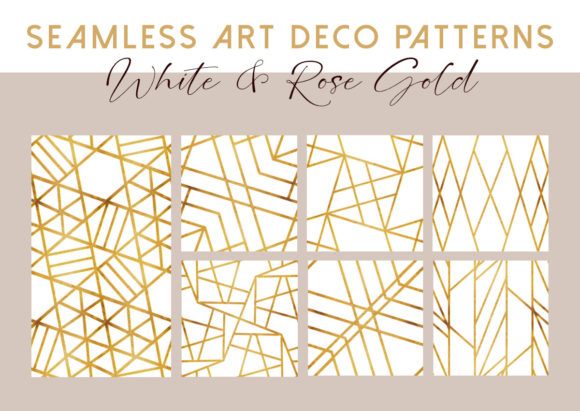
When you work regularly with surface design, you quickly learn that the right pattern can save hours of production time while elevating the final result. Seamless Deco Patterns Rose Gold White is a collection of seven Art Deco inspired seamless patterns rendered in rose gold and white. Built for versatility, this set is suited to professionals and hobbyists alike who need a refined, feminine aesthetic that works across print, web, and product design. Each file is tileable, high resolution, and delivered in JPG format with a minimum dimension of 3874x6715 pixels and a maximum of 4096x4096 pixels at 300 DPI. That means you can scale these patterns for a business card or a large format poster without losing sharpness.
Before you start using them, it helps to understand exactly what you have. The patterns are organized around a consistent palette: warm rose gold accents against clean white backgrounds, with occasional tonal variations that keep the imagery from feeling flat. The Art Deco influences show in the geometric framing, fan motifs, stepped lines, and symmetrical layouts. The files are ready to drop into your project, no additional cleanup or editing required. Because they are seamless, you can tile them across any surface and the edges will not break the continuity of the design.
Where These Patterns Fit in Your Creative Workflow
Surface pattern design is rarely a standalone task. Whether you are building a brand asset library, designing a collection of wedding invitations, or formatting a book cover for KDP, the pattern work usually sits between the concept stage and the final production stage. The Seamless Deco Patterns Rose Gold White set is designed to enter your workflow during the asset selection phase, right after you have defined the style and color direction but before you start layout mockups or printing tests.
If you are working on a bridal shower invitation, for instance, you would first settle on the event tone: elegant, modern, with a hint of vintage glamour. Once that direction is locked, you can open this pattern set and pick a tile that supports the invitation structure. The rose gold tint works particularly well on cream or blush cardstock, and the geometric repetition provides a structured backdrop for typography. You are not hunting for a texture or generating one from scratch. You are selecting a tested asset and moving directly into composition.
The same logic applies to fashion accessories. If you design fabric repeats for scarves, clutches, or cosmetic pouches, these patterns give you a ready-to-apply surface. Because they are seamlessly tiled, you can wrap them around a product mockup without worrying about alignment. The large canvas size also allows you to crop or scale the pattern to a specific product area while preserving resolution.
Wedding and Anniversary Decor
Rose gold and white is one of the most popular color combinations for contemporary weddings, especially for late spring, summer, and early fall ceremonies. These patterns work directly on table runners, welcome signs, seating charts, menu cards, and favor boxes. You can print them at home on a quality inkjet or send them to a professional printer for larger panels. The 300 DPI resolution ensures that printed materials maintain crisp lines, even when scaled up to 24 by 36 inches. For DIY decor, you can tile the pattern across a PDF and cut individual elements for banners, backdrop panels, or cupcake toppers. The seamless nature of the files means that if you need a larger printed area, you simply repeat the tile in your design software without the edges showing.
Bridal Shower and Bachelorette Party Stationery
Classy stationery requires a balance between ornament and readability. These patterns provide enough visual interest to fill a background or accent panel without overwhelming the text. Use the denser motifs for envelope liners or the reverse side of a card, and use the simpler geometric repeats for the front where names and dates sit. Because the set includes seven distinct patterns, you can mix and match across different pieces of the same stationery suite. The invitation might use one pattern, the RSVP card another, and the thank you note a third, creating a cohesive but varied visual system.
KDP Book Covers and Interiors
Self publishers and KDP authors often struggle to find cover backgrounds that look professional without costing a licensing fee per project. This set is royalty free once purchased, so you can use it across multiple book titles within your catalog. The Art Deco style fits well with romance novels, women s fiction, self help titles with a feminine tone, and even poetry collections. For a cover, you would place the pattern as a full background layer, then add a text box or image overlay on top. Because the patterns are high resolution, you can fill a 6x9 inch trim size or a larger hardcover format without pixelation. For interiors, use the pattern sparingly as a chapter header background or a page border element. The subtle rose gold against white keeps the pages readable while adding a premium feel.
Home Decor Printables
Printable wall art is a fast growing category for Etsy sellers and independent creators. With these patterns, you can produce a set of coordination prints that share the same color story but vary in layout. Print them in standard frame sizes such as 8x10, 11x14, or 16x20. The seamlessness means you can size the pattern to fill the entire canvas without cropping an awkward edge. Place them in rose gold frames for a consistent gallery wall look, or mix them with solid colored prints for contrast. The same files work for decoupage projects, drawer liners, or wrapping paper for small gifts.
Integration with Design Tools and Platforms
Because the files are JPGs at 300 DPI, they open directly in virtually any design application. If you work in Adobe Photoshop, you can drag the pattern into your canvas and set it as a pattern overlay or a smart object that you can scale and rotate without losing quality. In Adobe Illustrator, place the image as a linked file and tile it using the transform tools. For Canva users, upload the JPG to your media library and apply it as a background element on any design. The tileability is preserved because the image wraps seamlessly, so even if Canva tiles it automatically, there will be no visible seams.
If you use Affinity Designer or Procreate, the process is similar: import the file, create a pattern fill layer, and adjust the scale to match your canvas. The large pixel dimensions give you room to scale down without losing clarity, but you can also scale up modestly if needed. For most print projects, keeping the pattern at 100% or slightly smaller yields the best results.
Organization and Long Term Use
One practical consideration is file naming and storage. The set comes with seven JPG files, each with a different pattern. To streamline your future workflow, rename each file with a descriptive term that matches the pattern type, such as rose-gold-fan-repeat.jpg or white-geometric-border.jpg. Store them in a dedicated folder within your design assets library. If you use a digital asset management tool or even a simple cloud folder, tag them with keywords like seamless, Art Deco, rose gold, wedding, feminine, luxury. This makes retrieval quick when you start new projects months or years later.
Because the set is tileable, you can also create your own composite patterns by layering two different tiles at reduced opacity. For example, you could place a dense geometric pattern at 20% opacity over a more open motif to create a rich, textured background. This extends the utility of the seven files far beyond their individual appearances. Experiment with blending modes such as Multiply, Screen, or Overlay to find variations that suit specific lighting or printing conditions.
Quality Control and Printing Considerations
Before committing to a final print run, test the pattern on your intended substrate. Rose gold tones can vary in appearance depending on whether you are printing on matte paper, glossy paper, or fabric. Request a physical proof from your printer if possible, or print a small sample on your home printer first. Because the files are RGB JPGs, convert them to CMYK if your print house requires it, and check that the rose gold does not become muddy. Many commercial printers accept RGB files and handle the conversion internally, but confirm beforehand.
For digital projects such as websites or social media graphics, the RGB files are already optimized. Pay attention to file size: at 300 DPI and 4096 pixels on the longest side, a single JPG may be several megabytes. This is fine for print and for web use where speed is not sacrosanct, but if you are building a website, consider resizing the pattern to 72 DPI and compressing the JPG for faster loading. The seamless nature remains intact regardless of resolution.
Final Observations on Workflow Efficiency
The real value of a pattern set like Seamless Deco Patterns Rose Gold White lies in the time it removes from your production pipeline. Instead of designing a pattern from scratch, testing its repeat, adjusting colors, and exporting at the correct resolution, you open a finished file and place it. For a freelancer juggling multiple client projects or a small business owner who needs to launch products quickly, that time saving directly affects output volume and consistency.
Furthermore, the Art Deco style is durable. It does not follow a seasonal trend that will look dated next year. The rose gold and white palette has been a staple in luxury design for several seasons and remains popular in both print and digital spaces. Investing in a set like this gives you a versatile asset that you can use across seasonal promotions, evergreen products, and client work without needing to refresh the aesthetic constantly.
When you purchase from the store, note that this set is also available in a wide range of other colorways. If you find the rose gold and white combination works well for your current projects, consider adding a complementary color variant to your library. This gives you flexibility when a client requests a different palette or when you want to create a series of products that share a structural design but differ in color. The patterns themselves remain the same, so your familiarity with the layouts carries over.
Whether you are designing for a wedding, a book cover, a fashion accessory, or a home decor printable, these seamless patterns remove friction from your creative process. They serve as a foundation that you can build upon, layer, and adapt. With seven distinct tiles at your disposal, you have enough variety to maintain visual interest across a full project while keeping the color story and style tightly controlled. That combination of efficiency and consistency is exactly what practical designers look for in a surface pattern collection.